MyInvois on every document
Sales invoices, credit notes, self-billed invoices and consolidated B2C invoices are submitted and validated automatically. The LHDN identifier sits on the document.
asasiiledger
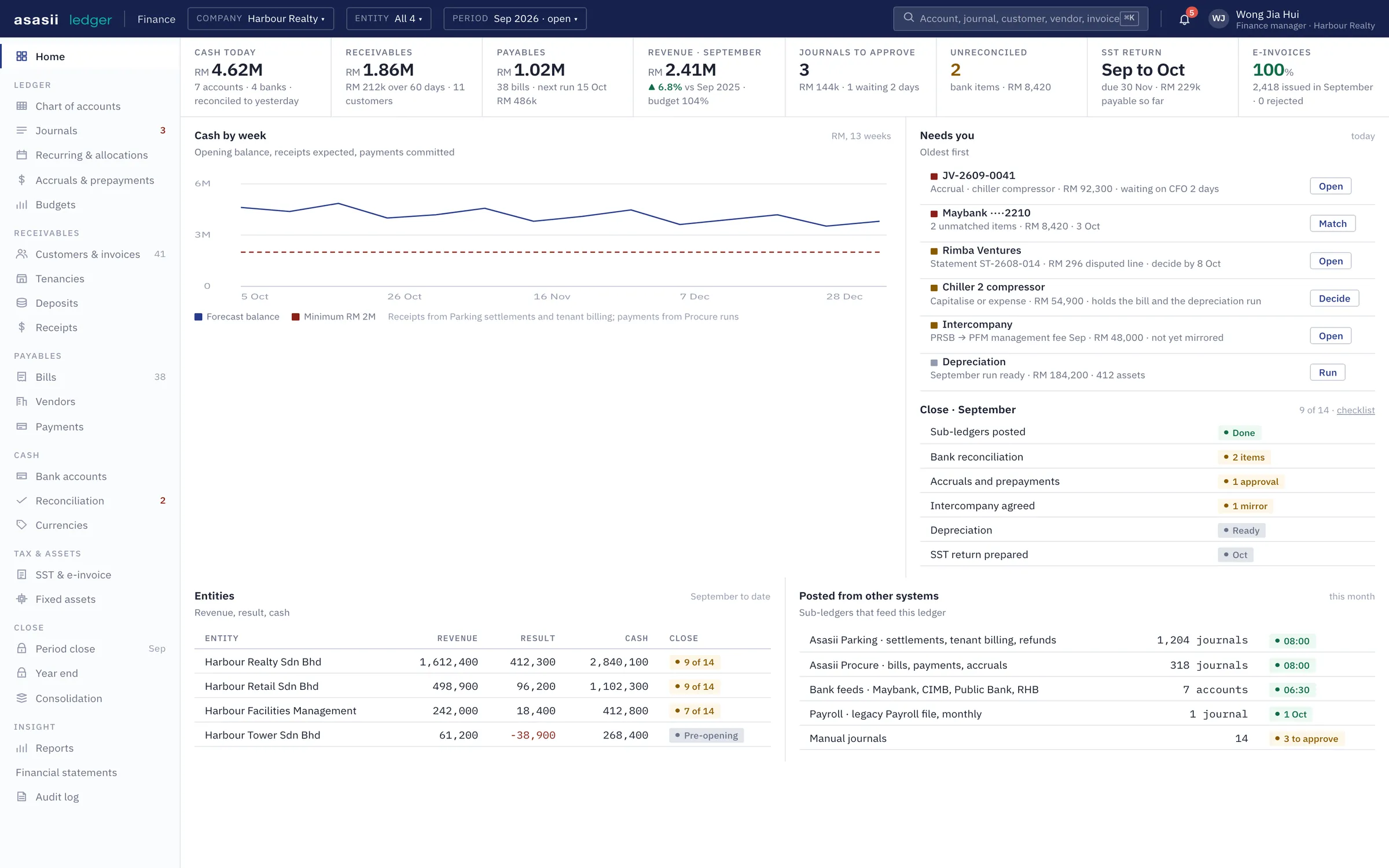
asasii Ledger is the general ledger, receivables, payables, bank, tax, assets, budgets, close and consolidation for a group of entities. Every sales document goes to MyInvois, every bank line is matched by seven in the morning, and the month closes in days, not weeks. Licensed outright, hosted in Malaysia, maintained under one agreement.
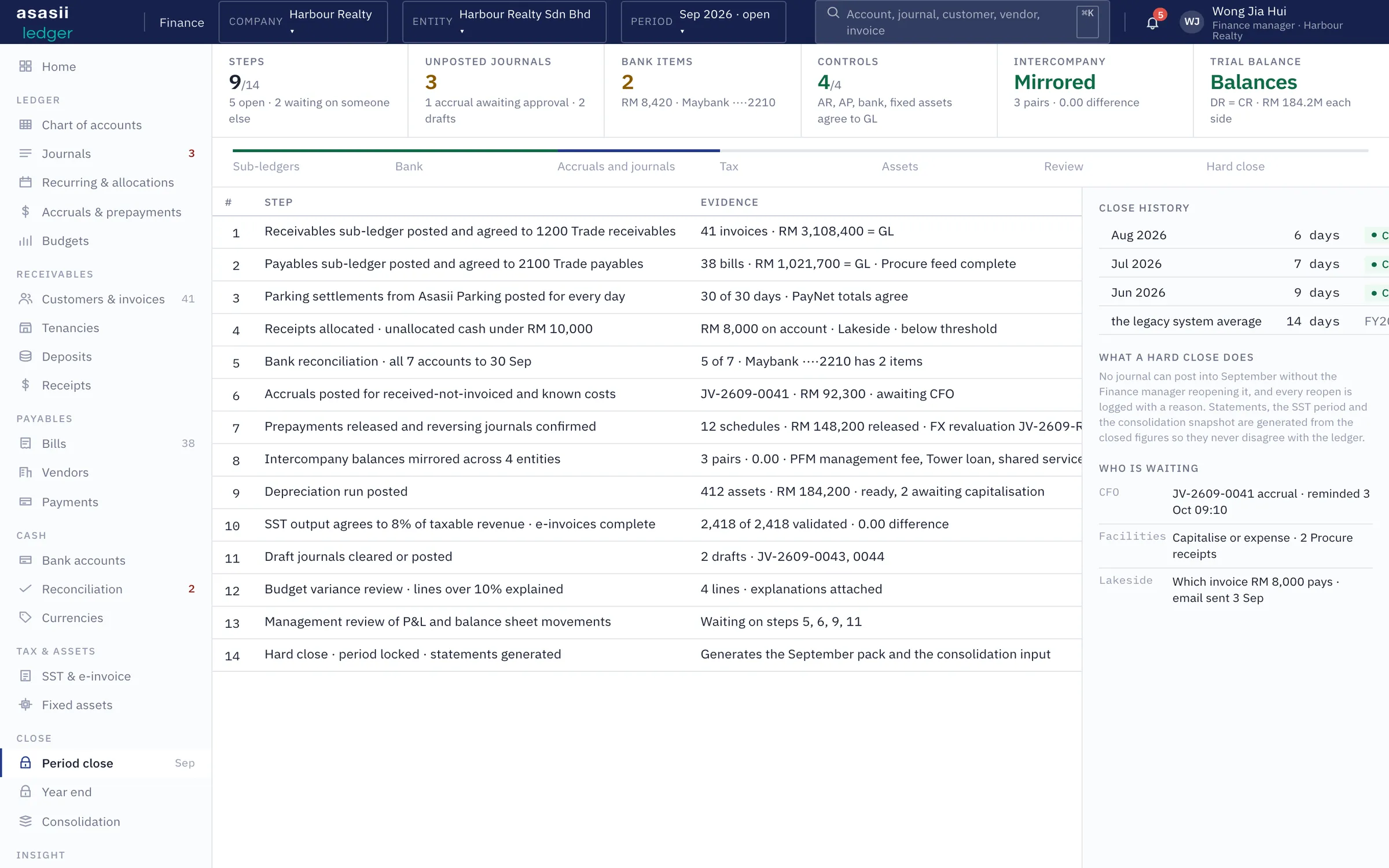
Sub-ledgers post all month from the products and the bank. The close is a checklist with evidence on every line, and the consolidation runs itself when the last entity locks.
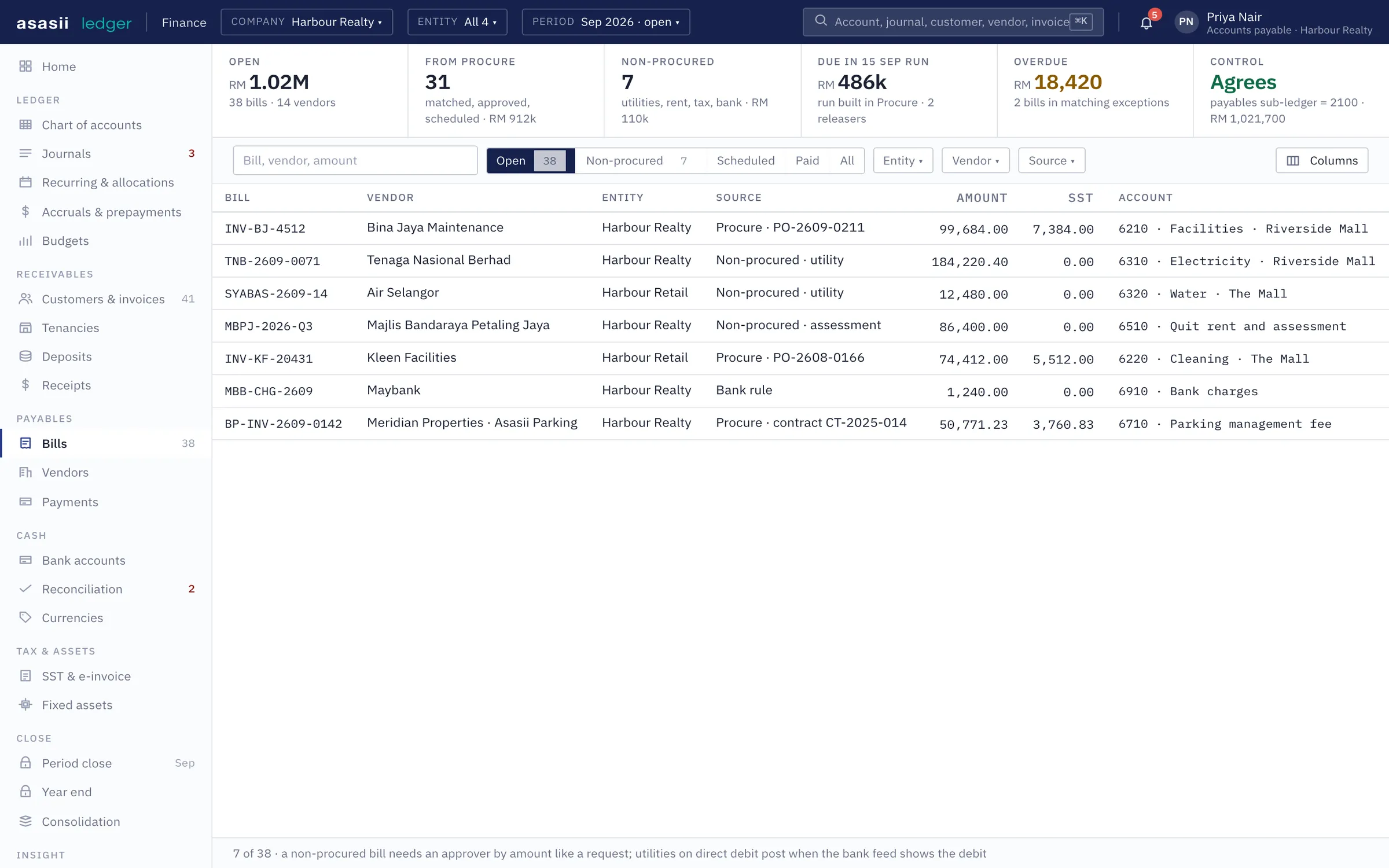
Bills from asasii Procure, settlements from asasii Parking, tenant billing on the first, bank lines by seven each morning. Nothing waits for month end.
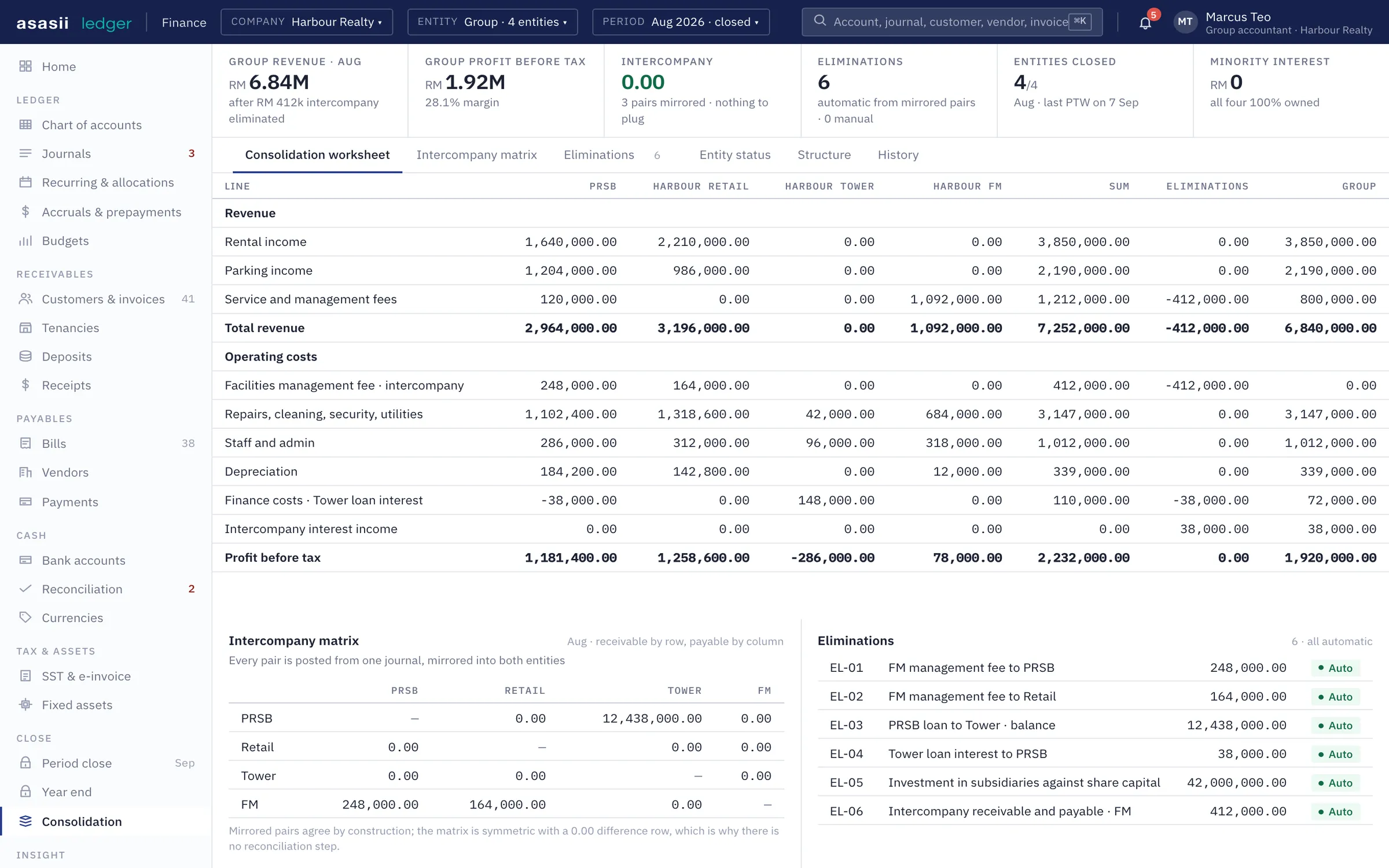
Fourteen steps per entity: sub-ledgers agreed to the ledger, bank reconciled, accruals and prepayments posted, intercompany mirrored, tax prepared. Each step shows who did it and what it agreed to.
A soft close locks the sub-ledgers while the finance manager finishes journals. A hard close locks the period for everyone. Reopening is a logged decision, not a setting.
Intercompany pairs are mirrored as they post, eliminations are generated from them, and the group statements are ready when the last entity hard closes.
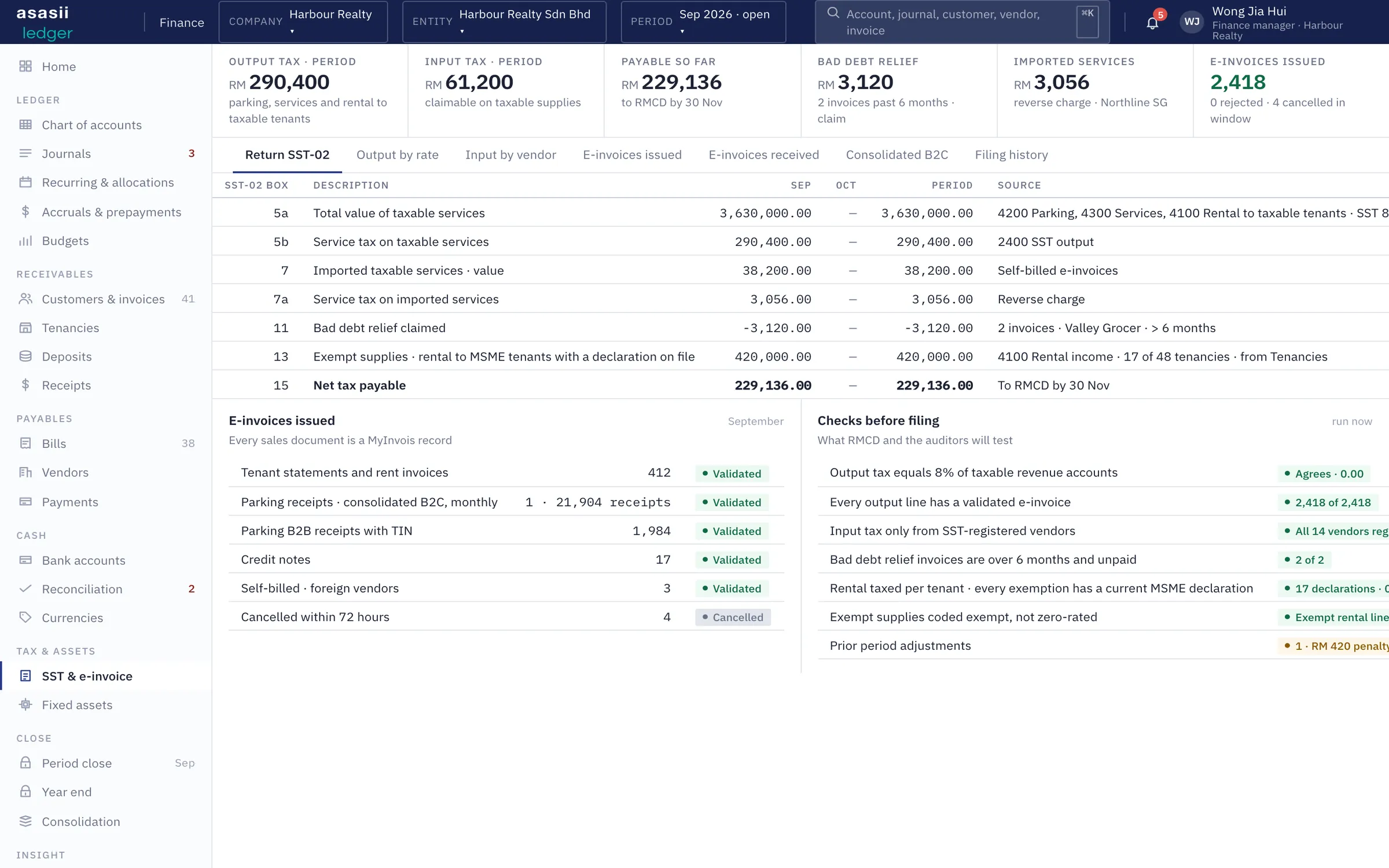
The statutory pieces are inside the ledger, not bolted on. They run on the same data the accounts run on.
Sales invoices, credit notes, self-billed invoices and consolidated B2C invoices are submitted and validated automatically. The LHDN identifier sits on the document.
Output and input tax by rate, SST-02 generated for the taxable period, bad debt relief and imported services handled. Rental taxed per tenancy from the MSME declaration, never as a blanket rule.
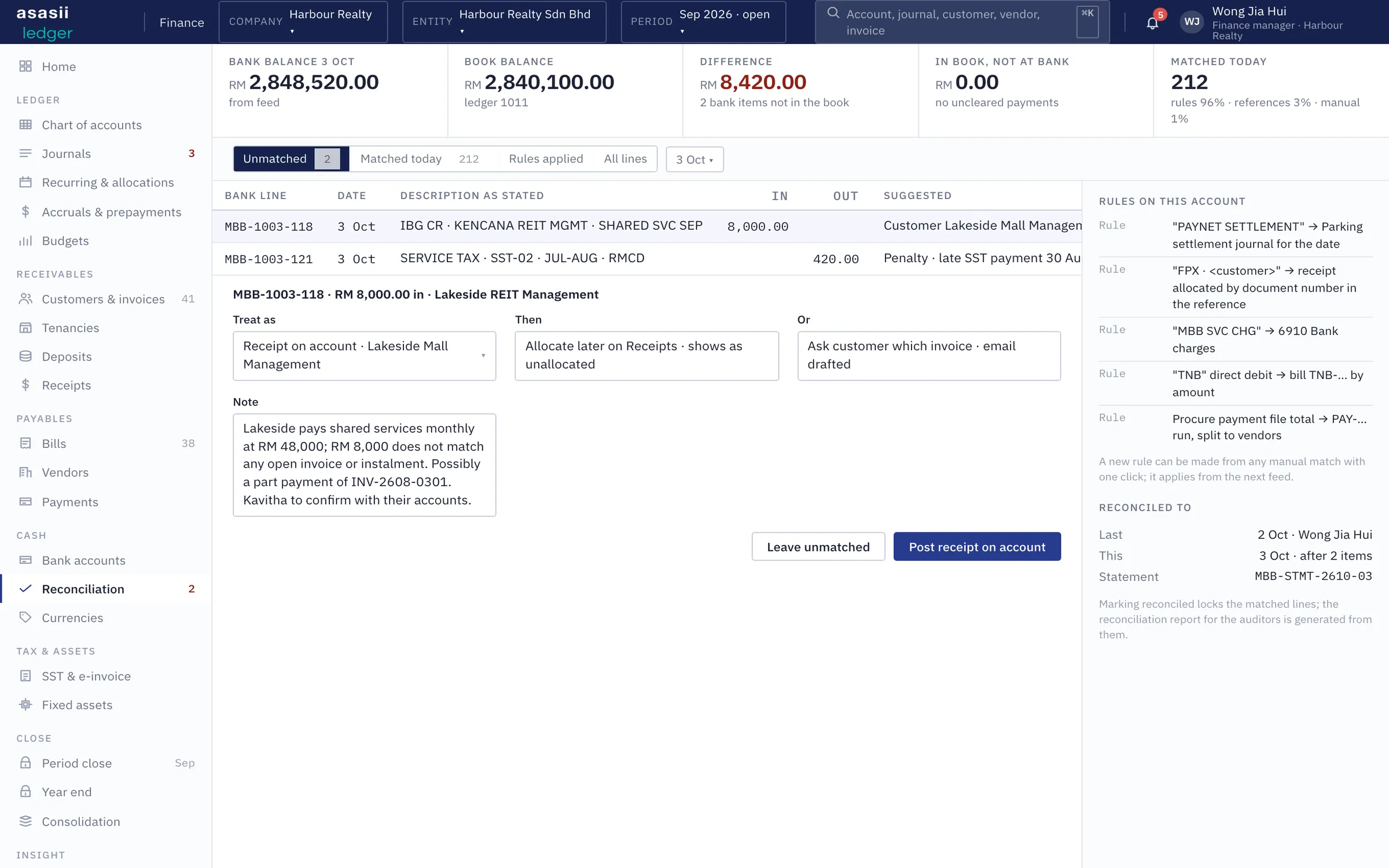
Statements from Maybank, CIMB, Public Bank and RHB imported daily. DuitNow and IBG payment files generated from the payment run, with proxy lookup before a first payment.
Every posting, approval and change is recorded and cannot be edited or deleted, for the retention the Companies Act 2016 requires. MFRS reporting and a quarterly pack template for listed groups.
Core accounting for a group of entities, replacing a legacy accounting package without losing its structure.
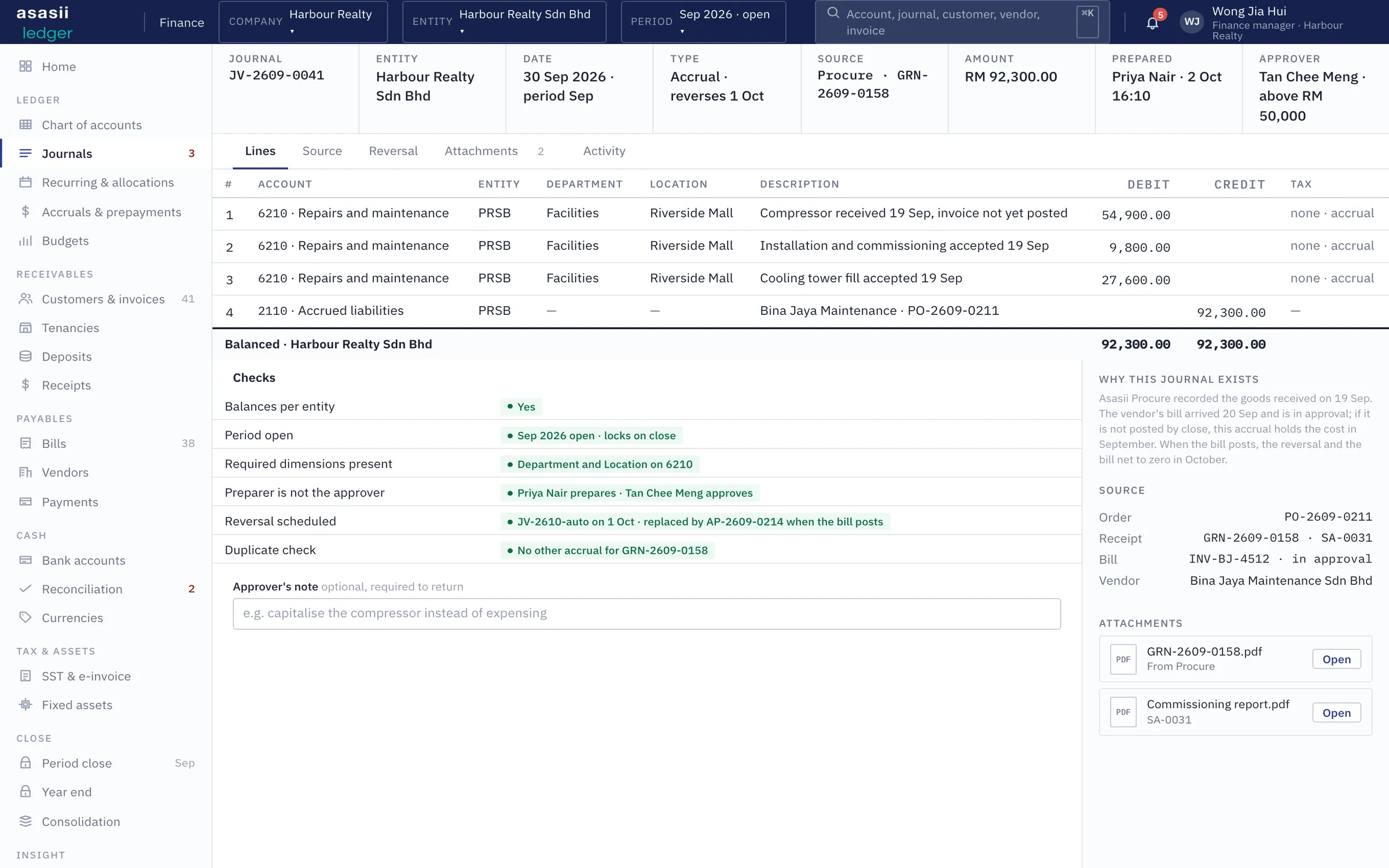
Segmented chart of accounts with entity, department, cost centre and project dimensions. Journals with approval, recurring and reversing journals, allocations, period control and a thirteenth adjustment period.
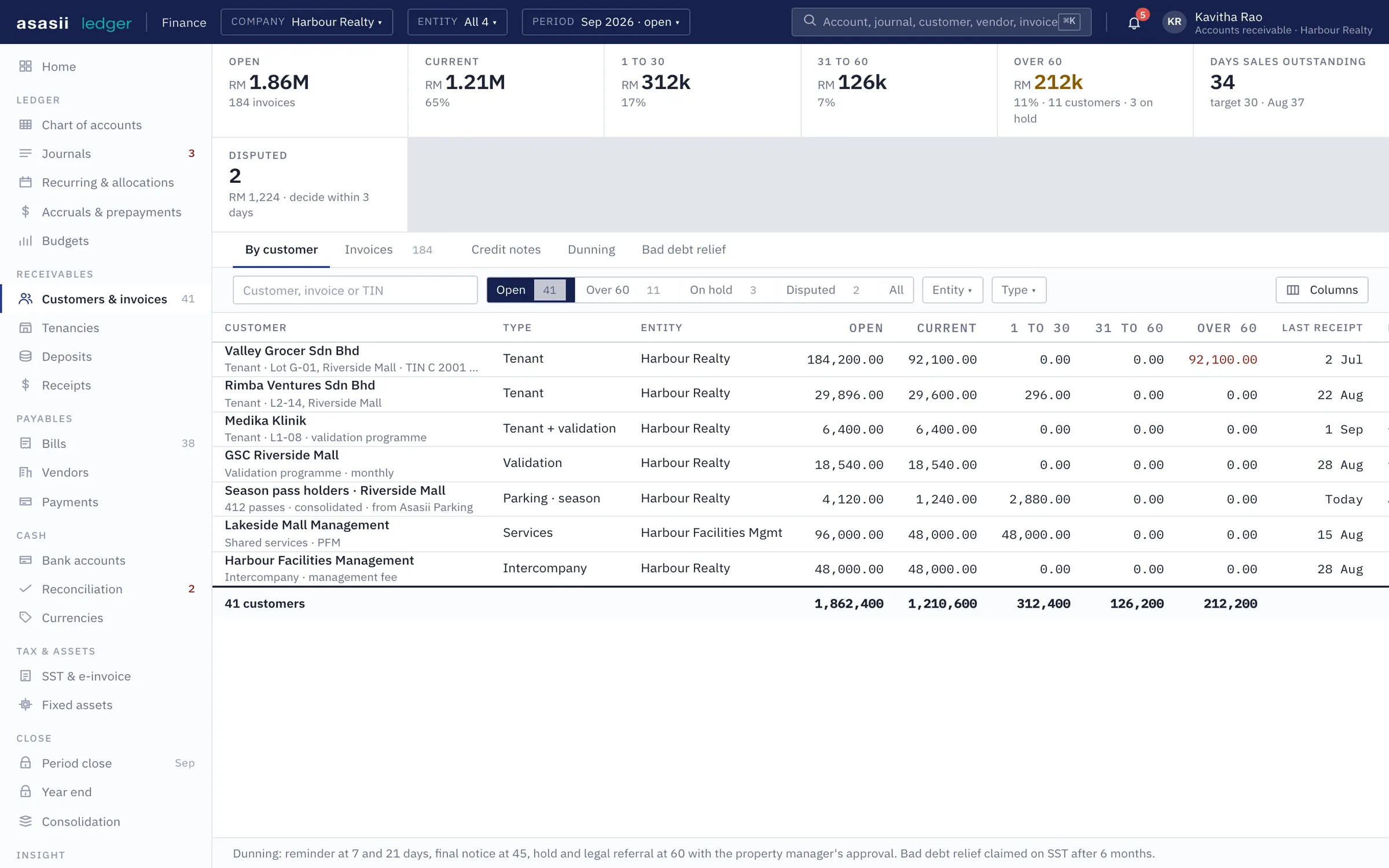
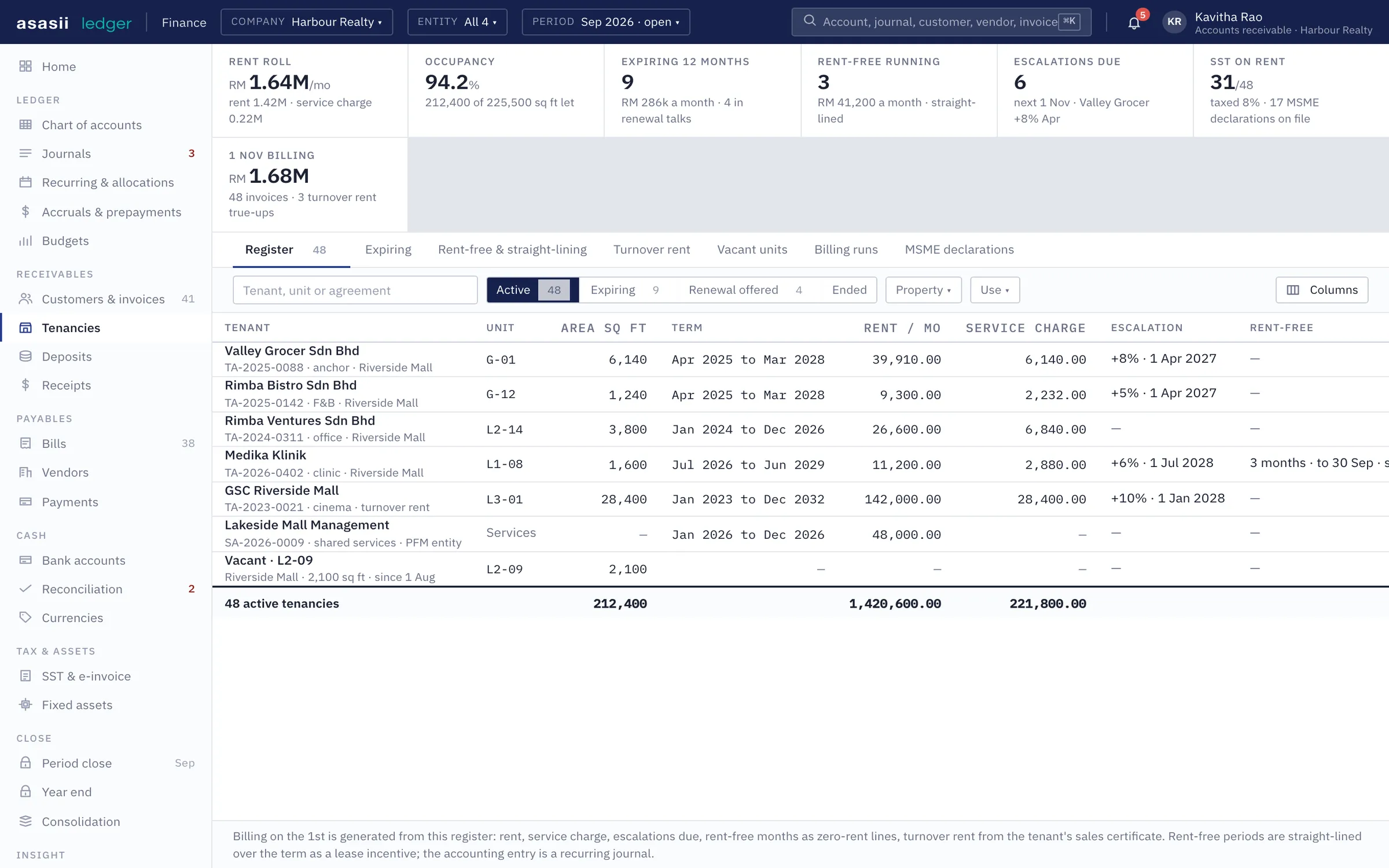
Customers, invoices and credit notes, receipts with allocation, ageing, dunning and statements. A lease register that bills rent and service charge on the first, with deposits tracked per tenancy.
Vendors shared with Procure, bills with three-way match handoff, payment runs, remittances and ageing. Bank accounts, reconciliation with rules, petty cash and multi-currency revaluation.
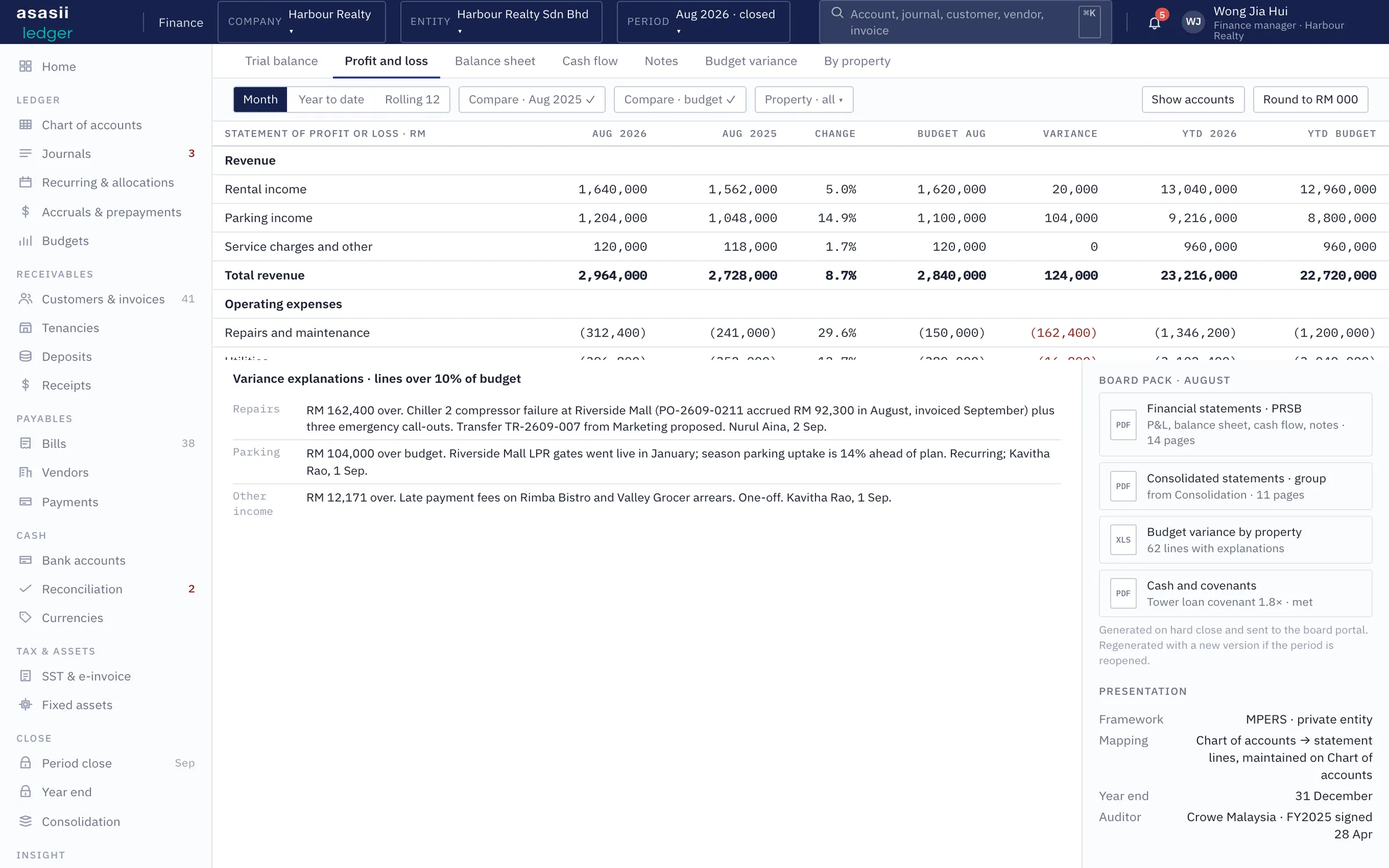
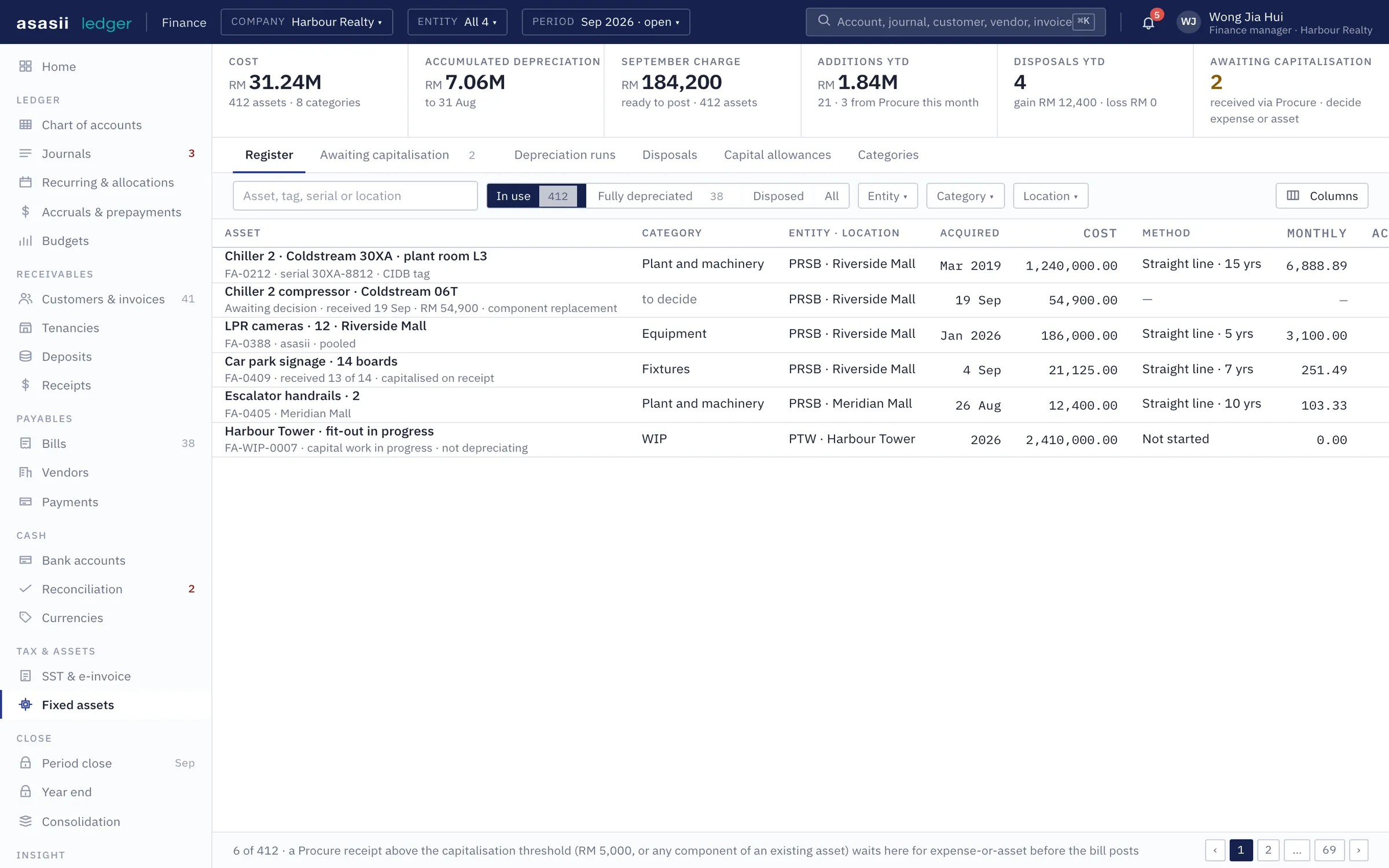
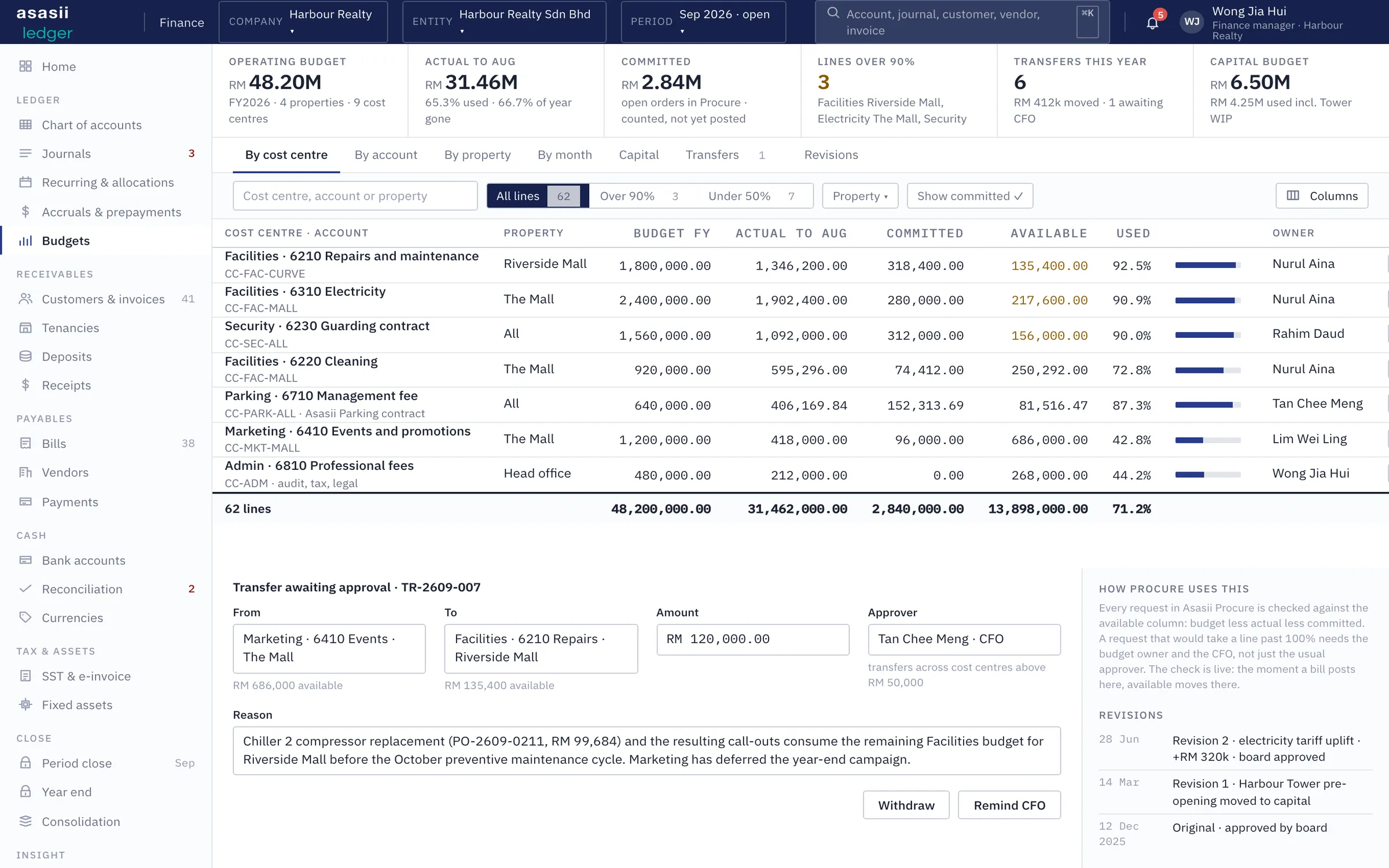
Fixed asset register with component accounting, depreciation runs and capital allowances. Budgets by account and dimension with versions and variance. Trial balance, P&L, balance sheet and cash flow by entity and consolidated.
Finance runs the books, managers approve from an inbox, customers read their own statements and pay online, the platform team runs the estate, and the group reads every client side by side.
The migration is a project with a reconciliation report at the end, not a hope. The chart, open items, balances and history come across, and the old system stays readable until the auditors sign.
The segmented chart is imported as it is. Departments, cost centres and projects become dimensions rather than account segments, with a mapping the client signs off.
Open receivables, payables and bank items load as documents, not as a lump. Opening balances agree to the last closed trial balance to the sen.
Prior periods are loaded so variance reports and prior-year comparisons work from the first month on the new ledger.
One month runs in both systems. The reconciliation report shows every difference and its reason, and the client's auditors sign before the old system is retired.
Built for the questions an audit committee and an internal audit will ask before signing.
Single sign-on with the group's identity provider, MFA for every console, and a finance role matrix with segregation of duties enforced, not just documented.
Journals, transfers, write-offs and credit notes above a limit go through the inbox. Limits are per role and per entity, delegation is time-boxed and logged.
Postings, approvals, reopenings and master data changes are recorded with who, when and the previous value, retained for seven years and exportable to the auditors.
Customer and vendor data under the Personal Data Protection Act 2010, hosted in Malaysia, with retention per data class and a documented processor role.
One annual agreement covers the software, the hosting, the monitoring and the people who answer.
Severity-based response and restoration targets, measured and reported monthly. A blocked close or a failed MyInvois submission is a priority one.
MyInvois, bank feeds, payment rails and the identity provider are watched continuously. A status page shows availability and incidents to every client.
Nightly backups with a ledger integrity check. A full restore drill runs on a schedule and its result is recorded for the client to read.
The people who answer have run a close. Questions about a reconciliation or an SST box reach someone who can read the ledger, not a ticket queue.
The commercial model is a licence and an agreement, not a subscription that takes the books with it when it ends.
Licences and every record belong to the client. The ledger, the documents and the audit trail export in full, in standard formats.
Users are not counted. Adding people to an entity costs nothing, and adding a special purpose vehicle mid-year is a form, not a contract change.
Software, hosting, monitoring, statutory updates and support under one agreement with defined response times.
Procure bills and Parking settlements post straight into the sub-ledgers. Vendors and customers are one master across the products.
Send us the entity list, the chart of accounts and the close calendar. We come back with a migration plan, a role matrix and a proposal.
Request a proposal